

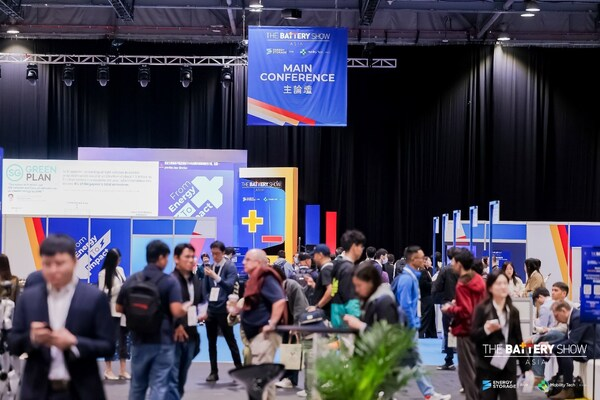
The 2026 Wuhan International New Energy Battery Exhibition was held at Wuhan International Expo Center from September 22 to 24. With the theme of “Power Battery Innovation Drives Low-carbon Industrial Upgrade”, this three-day exhibition covers the whole industrial chain of power batteries, including battery raw materials, cell manufacturing, PACK integration, BMS system, energy storage batteries, battery testing equipment and battery recycling technologies. It has become a key industrial event to observe the development trend of China’s power battery and energy storage industry in 2026.
Relying on Wuhan’s “China Auto Valley” complete vehicle supporting capacity and Optics Valley’s scientific research advantages, Central China has formed a solid foundation for the new energy battery industry. China’s power battery industry continues to expand, which greatly drives the demand for high-safety, low-cost new battery technologies. Nevertheless, the industry still faces prominent challenges. For global trade, changing international trade rules and regional industrial localization requirements put forward higher standards for Chinese battery enterprises. Domestically, consistency control in mass production still needs further improvement, and there are bottlenecks in the large-scale, low-cost recycling of retired power batteries.
According to keynote reports and product releases at the expo, the future development of China’s power battery industry will focus on three major directions: high-safety battery material innovation, intelligent manufacturing of battery cells, and full-lifecycle battery recycling. More importantly, the industry has accelerated the industrialization of sodium-ion batteries, forming a parallel technical route alongside lithium-ion batteries for energy storage and low-speed power scenarios.
Breakthroughs in Sodium-ion Battery Industrialization
One of the core highlights of this exhibition is the large-scale display of sodium-ion battery products and PACK solutions. In the early stage, sodium-ion battery development was limited by material system stability. The new-generation sodium-ion battery products shown at the expo feature excellent low-temperature performance, high safety and lower raw material costs, suitable for energy storage systems, low-speed vehicles and backup power supply. It greatly enriches the product matrix of new energy power sources and eases the pressure on lithium resource supply.
It is worth noting that sodium-ion battery industry is now in the stage of large-scale pilot production. Although domestic enterprises have mastered core material and cell manufacturing technologies, the whole industry is still in the early commercial competition stage. Continuous technical iteration and long-term reliability verification are required for wider global market promotion.
Power Battery Recycling: Building Closed-Loop Industrial Chain
Different from the long-cycle R&D of new battery materials, power battery recycling technology has entered the stage of large-scale promotion in 2026. In the early stage, battery recycling was mainly limited by low metal recovery efficiency and high processing cost. At present, the industry logic has changed fundamentally, and recycling enterprises have achieved better balance among recovery rate, environmental protection and operating cost.
On the supply side, leading recycling manufacturers have completed technical verification and production line upgrade from 2025 to 2026. Multiple enterprises have signed long-term cooperation orders with battery factories and new energy vehicle OEMs, fully verifying the engineering reliability and commercial value of battery closed-loop recycling.
On the demand side, the market has shifted from simple waste disposal to full-lifecycle resource recycling. Recycled materials can be reused in battery production, helping battery manufacturers reduce raw material costs and meet carbon footprint requirements. With mature processing technology, battery recycling has become an indispensable part of the global power battery industrial chain.
Conclusion
The 2026 Wuhan International New Energy Battery Exhibition clarifies the development path of the power battery industry. In the short term, sodium-ion batteries will rely on cost and safety advantages to realize rapid market penetration and capacity release. In the medium and long term, battery recycling will build a closed-loop industrial chain, supporting the sustainable development of lithium and sodium battery industries.
While further consolidating the advantages of the domestic battery industrial chain, Chinese manufacturers will continue to export high-quality battery products and recycling technologies to global markets, and promote the healthy and sustainable development of the global new energy battery industry.
Post time: Oct-08-2026