

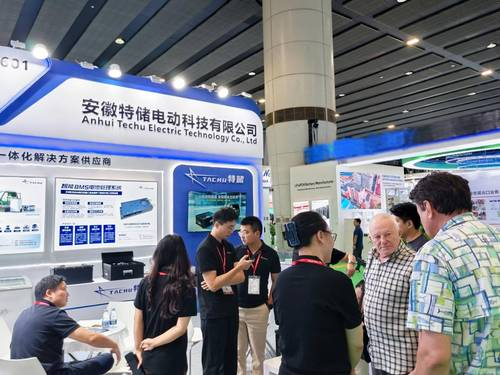
The 2026 China International Energy Storage & Power Battery Technology Conference and Exhibition was held at Suzhou International Expo Center. The three-day exhibition focused on power batteries, sodium-ion batteries, energy storage systems, integrated energy storage and battery swapping equipment for two-wheelers, as well as battery thermal management technologies. With the theme of “Collaborative Innovation of Energy Storage and Power Batteries, Low-Carbon Solutions Empower Global Mobility”, the exhibition fully covers lithium power batteries, sodium cells and PACKs, BMS battery management systems, energy storage converters, integrated battery swapping & energy storage systems for two-wheelers, battery thermal management solutions, battery testing equipment and battery recycling technologies. It serves as a professional industry event in the Yangtze River Delta, dedicated to the integrated application of energy storage and power batteries for global buyers.
Relying on Suzhou’s geographical advantages as a high-end manufacturing base in the Yangtze River Delta, Jiangsu and surrounding regions host a large number of power battery material enterprises, cell factories, energy storage system integrators and battery swapping equipment manufacturers, forming a complete industrial cluster for energy storage and power batteries. The domestic market for energy storage and two-wheeler power batteries maintains rapid growth. Overseas markets such as Southeast Asia and Latin America have rising demand for energy storage batteries, power batteries matched for e-motorcycles and integrated battery swapping & energy storage solutions. At the same time, the industry faces multiple challenges: thermal runaway protection of batteries, carbon footprint certification for exported products, differences in battery regulations and standards across countries, and cost control of PACK products. Shifts in global trade patterns put higher requirements on Chinese exporters of batteries and energy storage equipment. Domestically, consistency in mass production of battery systems, stability of thermal management systems, and operation costs of integrated energy storage and battery swapping products remain core pain points to be solved.
According to keynote speeches and new product launches at the exhibition, the future development of China’s energy storage and power battery industry will focus on three major directions: R&D of high-safety and long-cycle power battery materials, large-scale deployment of integrated energy storage & two-wheeler battery swapping systems, and upgrading of intelligent battery thermal management technologies. Importantly, sodium-ion battery systems that can be applied to both energy storage stations and two-wheeler e-motorcycle battery swapping scenarios have accelerated industrialization, forming a parallel technical route alongside lithium-ion solutions and providing diversified energy options for distributed energy storage and shared two-wheel mobility.
Breakthroughs in Industrialization of Integrated Energy Storage & Battery Swapping Systems
One of the highlights of this exhibition is the large-scale display of multiple integrated energy storage and battery swapping systems as well as supporting power battery PACKs targeting overseas markets. In the early stage, integrated energy storage and battery swapping products were limited by insufficient heat dissipation, poor system compatibility and weak remote operation & maintenance capabilities. The new-generation integrated products showcased at the exhibition combine energy storage units and intelligent battery swapping terminals, equipped with AI thermal management systems and cloud-based battery health monitoring modules. They can not only perform peak shaving and valley filling as distributed energy storage, but also directly provide fast battery swapping services for e-motorcycles. Designed for high-temperature tropical outdoor scenarios, they help overseas operators reduce station construction costs, improve the utilization rate of battery assets and ease the pressure on lithium resource supply.
It is worth noting that the industry of integrated energy storage and two-wheeler battery swapping is now in the phase of large-scale commercial expansion. Domestic manufacturers have overcome core technical hurdles including cell integration, thermal management and BMS collaborative control. However, product deployment in multiple overseas markets still requires continuous local safety certification and long-term environmental reliability verification to further expand global market share.
Power Battery Recycling: Building a Closed-Loop Industrial Chain for Energy Storage and Two-Wheeler Battery Swapping Batteries
Different from the long-term R&D roadmap of basic battery materials, the recycling technology of power lithium batteries for energy storage and two-wheelers entered large-scale promotion in 2026. In the early stage, recycling of such batteries was restricted by diverse cell specifications, low metal recovery efficiency and high resource treatment costs. At present, the underlying logic of the industry has changed fundamentally. Recycling enterprises have achieved a better balance among resource recovery rate, environmental compliance and project operation cost.
On the supply side, leading recycling manufacturers completed production line upgrades and technical verification from 2025 to 2026. Multiple enterprises have signed long-term recycling cooperation orders with energy storage integrators, e-motorcycle OEMs and battery swapping operators, fully verifying the engineering reliability and commercial value of the closed-loop recycling solution for energy storage and two-wheeler battery swapping batteries.
On the demand side, market demand has shifted from simple waste battery disposal to full-life-cycle resource recycling. Recycled materials can be reused in the production of power batteries and energy storage cells, helping battery manufacturers cut raw material procurement costs and meet carbon footprint compliance requirements for overseas markets. With continuous technological improvement, recycling of energy storage and two-wheeler power batteries has become an indispensable part of the energy storage and battery swapping ecosystem industrial chain.
Conclusion
The 2026 China International Energy Storage & Power Battery Technology Conference and Exhibition clarifies the development path of the energy storage and power battery industry. In the short term, sodium-ion batteries suitable for energy storage plus e-motorcycle battery swapping scenarios will achieve rapid market penetration and capacity release relying on cost and safety advantages. In the medium and long term, battery recycling will build a complete closed-loop industrial chain, supporting the sustainable development of lithium and sodium batteries in energy storage and two-wheel mobility sectors.
While further consolidating the advantages of the domestic energy storage and power battery industrial chain, Chinese manufacturers will continue to export high-quality power batteries, integrated energy storage and battery swapping equipment, and battery thermal management solutions to global markets, and promote the healthy and sustainable development of the global new energy energy storage and two-wheel mobility industry.
Post time: Oct-15-2026